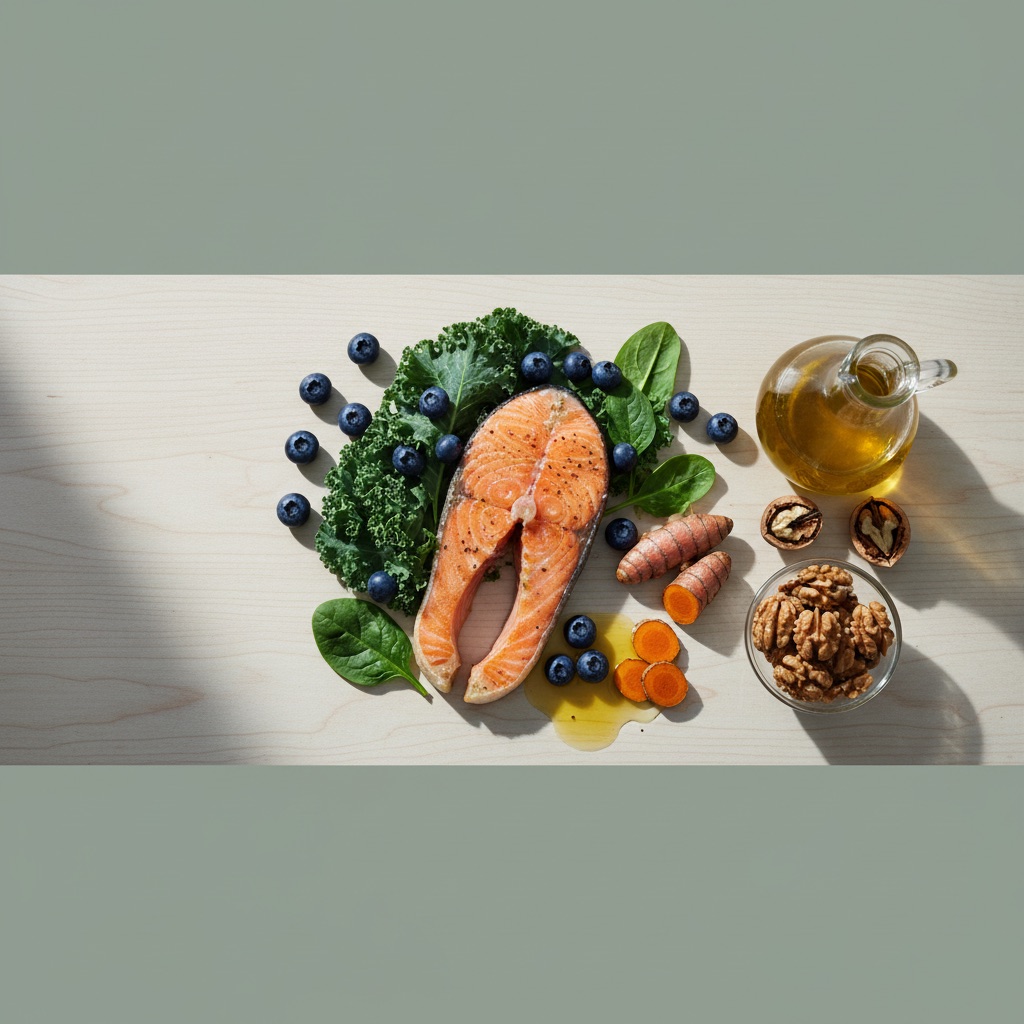
No food heals a disc or realigns a joint. What nutrition can do is influence the background inflammatory environment your tissues recover in, support the protein needs of healing, and help manage body weight — all of which affect how a musculoskeletal problem behaves over time.
What does “anti-inflammatory eating” actually mean?
It is not a restrictive protocol or a list of superfoods. In practice it describes a pattern: mostly whole foods, plenty of vegetables and fruit, adequate protein, sources of omega-3 fats, olive oil rather than heavily processed fats, and fewer ultra-processed foods and sugary drinks.
If that sounds familiar, it should — it closely resembles how people in this region traditionally ate. A Mediterranean-style pattern is one of the better-studied dietary approaches for general health, and you do not need imported products to follow it.
What helps most for musculoskeletal recovery?
- Enough protein. Often the biggest gap I see. Repair and maintaining muscle both depend on it, and requirements rise with age and after injury.
- Oily fish. Sardines, mackerel, salmon — a reliable source of omega-3 fats, and inexpensive locally.
- Vegetables and fruit across the week. Variety matters more than any single item.
- Adequate hydration and sensible alcohol intake. Both affect sleep quality, which in turn affects pain.
- Vitamin D and calcium status. Relevant to bone health and worth checking rather than guessing.
Does losing weight reduce back pain?
For some people carrying excess weight, gradual loss does reduce the load on weight-bearing joints and is associated with improvement. But it is neither a quick fix nor the explanation for everyone’s back pain, and framing it that way is unhelpful. I would rather build a sustainable pattern of eating and activity than set a number.
What about supplements?
Supplements can be appropriate where there is a genuine deficiency or an increased requirement. They are not a substitute for the overall pattern, and some interact with medication. Discuss them rather than self-prescribing from a pharmacy shelf.
Because I am both a chiropractor and a licensed dietitian, I can look at the musculoskeletal problem and the nutritional side together, in one appointment, rather than sending you to two separate providers.